Nano One Positions LFP Cathode Materials for Defence and National Security as Export Controls Threaten Battery Supply Chains
The article discusses the dual-use applications of LFP across civilian and defence markets in Canada, the U.S. and Europe, its importance to defence and national security, and Nano One’s engagement across the defence battery community.
Share this article:Written By: Adam Johnson, Senior Vice President of External Affairs at Nano One
Dual-Use by Design in Canada, US and Europe: LFP for Defence and Civilian Markets
In February 2026, Canada released a Defence Industrial Strategy[i] which identifies areas of focus, including Pillar IV: Securing Supply Chains for Key Inputs and Goods. This includes critical minerals, securing key Canadian assets and technology and deepening the domestic defence supply chain. Dual-use is seen as important to help grow Canada’s economy and the diversification of trading partners will help increase production for domestic use.
LFP is inherently dual-use: the same chemistry powering civilian energy storage and electric vehicles is increasingly specified for defence applications. The Center for Strategic and International Studies (CSIS), in its April 2026 report “A New Phase for the U.S. Battery Industry,”[ii] concluded that because defence remains a fraction of the total lithium-ion market, sustained linkages with the broader commercial industrial base will remain crucial for meeting defence needs. Nano One’s One-Pot process is designed to make exactly those economics accessible—enabling allied countries to establish domestic LFP cathode production in which commercial ESS and EV demand sustains the industrial base that defence requirements may draw upon in the future.
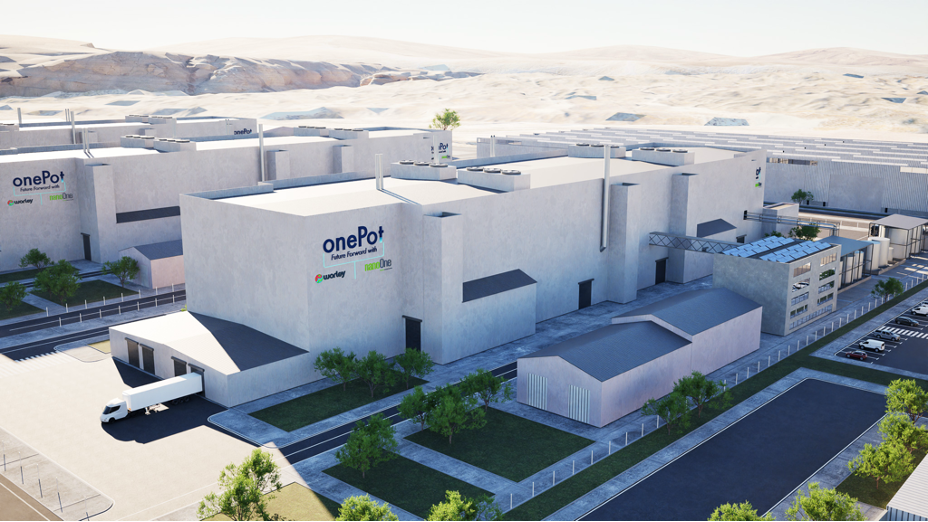
Defence battery volumes are modest relative to commercial markets—a scale that the Company’s Candiac, Québec facility can service today. The Design-One-Build-Many licensing strategy, in partnership with engineering and technology solutions provider Worley Chemetics, positions Nano One in allied jurisdictions to meet growing demand as military spending and procurement needs rise.
LFP’s thermal stability, long cycle life and lower cost relative to other lithium-ion chemistries make it suited to a growing set of defence applications:
- NATO-standard 6T vehicle batteries—the common battery format across allied military ground vehicles, where LFP’s thermal safety supports silent watch and onboard power. MITRE’s assessment projects increased LFP usage in hybridized military vehicles, the platforms this format serves.
- Drones, unmanned systems and directed-energy weapons—high-power applications where LFP’s power and safety characteristics are relevant, as the U.S. Department of Defense noted in awarding Nano One under DPA Title III.[iii]
- Uninterruptible power systems (UPS) and installation energy storage—defence facilities’ stationary power needs mirror commercial ESS, where LFP accounts for around 90% of new battery storage deployments, according to the IEA.[iv]
Defence planners in Canada, the United States and Europe are drawing the same conclusion: batteries are becoming strategic material.
Adam Johnson, Senior Vice President of External Affairs
“LFP has growing applications across military systems. Nano One’s One-Pot process enables domestic LFP production that serves both civilian markets—energy storage and electric vehicles—and defence customers from the same production line. That is what dual-use means in practice, and it is why the U.S. Department of Defense and the Government of Canada have invested in our growth,” said Adam Johnson, Senior Vice President of External Affairs at Nano One.
Why LFP Matters to Defence and National Security
A June 2025 assessment prepared by MITRE Corporation for the U.S. Department of Defense identified emerging military usage of LFP chemistries, with growth expected to continue, and projected increases in LFP usage in future defence applications.[v] The 2026 CSIS report reached similar conclusions: lithium-ion batteries—increasingly including LFP—are projected to meet the bulk of U.S. defence battery demand by 2050.
Supply, however, remains concentrated. The same MITRE briefing, drawing on its 2024 baseline, identified no then-existing domestic U.S. LFP cathode production capacity, with global production concentrated almost entirely in China[vi]—while naming Nano One among the companies driving new North American cathode production capacity. The IEA’s export-control analysis notes that efforts are underway to develop LFP production outside China, but that new restrictions on LFP cathode materials could impede these initiatives—underscoring the value of established, allied production capacity. China suspended most of its October 2025 battery-material export controls until November 10, 2026.[vii] Section 842 of the U.S. National Defense Authorization Act for Fiscal Year 2026 (10 U.S.C. § 4865)[viii] requires the Department of Defense to procure advanced batteries whose functional cell components—including cathode materials—are not sourced from foreign entities of concern, beginning with new acquisition programs on January 1, 2028, standard batteries in 2029 and existing programs in 2031—driving demand for allied-sourced LFP cathode material.
These supply chain measures coincide with a broader defence investment cycle: global military expenditure reached a record US$2.9 trillion in 2025,[ix] according to the Stockholm International Peace Research Institute (SIPRI)—the eleventh consecutive year of growth.
Building on Existing U.S. Department of Defense Support
Nano One’s defence positioning builds on its existing relationship with the U.S. Department of Defense, which awarded the Company US$12.9 million in September 2024 under the Defense Production Act Title III program to support the expansion of North American LFP cathode production. The award forms part of a broader increase in U.S. industrial base funding[x] for critical-minerals supply chains, including US$2 billion appropriated in 2025 to expand the National Defense Stockpile and US$5 billion to the Industrial Base Fund.
Candiac’s product qualification, production volumes and raw material sourcing are aligned with the requirements of defence and energy-storage customers, and the facility is advancing toward approximately 800 tpa of commissioned capacity targeted for the first half of 2027.[xi] The Candiac expansion has been built for supply chain integrity from the ground up: approximately 95% of equipment by procurement cost—and 100% of IP-sensitive equipment—has been procured from Canada, the United States and the European Union. This procurement approach is embedded in Nano One’s Design-One-Build-Many strategy under which the same plant design—and the same allied equipment supply chain—can be replicated across future licensed and partnered facilities. Advanced qualification of allied suppliers is increasingly important as defence and tax-credit frameworks restrict content from foreign entities of concern.
Engagement Across the Defence Battery Community
Nano One is a member of NAATBatt International, the North American advanced battery trade association, where Company representatives participate on the Military Batteries Community committee, among others. Nano One is also a member of the Battery Materials & Technology Coalition (BMTC), the North American battery supply chain’s advocacy voice in Washington, D.C. Through these organizations, the Company is engaged with the broader military power sources community, including forums connecting battery producers with U.S. Department of Defense stakeholders.
In Canada, Nano One is engaging with the Department of National Defence (DND) and defence industrial base stakeholders as Canada scales its defence commitments. In March 2026, the Government of Canada announced it had reached NATO’s 2% of GDP defence spending target[xii]—the largest year-over-year increase in generations—on a path to the alliance’s 5% commitment by 2035, including 1.5% of GDP directed to defence and security-related investments such as critical supply chains. This commitment is already translating into procurement: in July 2026, the Government of Canada selected a preferred supplier for up to twelve submarines under the Canadian Patrol Submarine Project—the largest defence procurement in Canadian history.
We are engaged with the defence battery community across North America, and as allied governments turn policy into procurement, we intend to be part of how they secure this supply chain.
Adam Johnson, Senior Vice President of External Affairs
[i] Government of Canada (2026), Canada’s Defence Industrial Strategy, https://www.canada.ca/en/department-national-defence/corporate/reports-publications/industrial-strategy/security-sovereignty-prosperity.html
[ii] CSIS (April 2026), Ray Cai and Jane Nakano, “A New Phase for the U.S. Battery Industry,” https://www.csis.org/analysis/new-phase-us-battery-industry
[iii] U.S. Department of Defense (September 26, 2024), “Department of Defense Awards $12.9 Million to Increase Production of Active Materials for Lithium Iron Phosphate Cathodes”; U.S. Department of Defense, DPA Title III Office, Nano One Award Summary (November 2024).
[iv] IEA (2026), Global Energy Review 2026, “Technology: Battery Storage,” https://www.iea.org/reports/global-energy-review-2026/technology-battery-storage
[v] MITRE Corporation (June 2025), “North American Battery Production Capacity Update,” Briefing Prepared for the U.S. Department of Defense, Approved for Public Release, Case #25-1677, Hosted by the Center for Research in Extreme Batteries, University of Maryland, https://creb.umd.edu/sites/creb.umd.edu/files/%28DistA%29%20North%20American%20Battery%20Production%20Capacity%20Update%20-%20%20for%20CREB%206June2025.pdf
[vi] IEA (2026), Energy Technology Perspectives 2026, “Supply Chain Risks and Industrial Competitiveness” (Precursor Cathode Material Above 95% China); IEA (2025), Global Critical Minerals Outlook 2025, “Beyond NMC Batteries” (About 98% of LFP Cathode Material Produced in China), https://www.iea.org/reports/global-critical-minerals-outlook-2025/beyond-nmc-batteries-supply-chain-issues-for-emerging-battery-technologies
[vii] Ministry of Commerce of the People’s Republic of China, Announcement No. 70 of 2025 (November 7, 2025), Suspending Announcements No. 55, 56, 57, 58, 61 and 62 of 2025 until November 10, 2026.
[viii] 10 U.S.C. § 4865, Added by Section 842 of the National Defense Authorization Act for Fiscal Year 2026, Public Law 119-60 (December 18, 2025).
[ix] SIPRI (2026), Trends in World Military Expenditure, 2025, https://www.sipri.org/publications/2026/sipri-fact-sheets/trends-world-military-expenditure-2025
[x] U.S. Public Law 119-21 (2025), https://www.govinfo.gov/app/details/PLAW-119publ21
[xi] Nano One (July 23, 2026), “Nano One Advances Candiac LFP Capacity Expansion With Engineering 85% Complete,” https://nanoone.ca/news/nano-one-advances-candiac-lfp-capacity-expansion-with-engineering-85-complete/
[xii] Prime Minister of Canada (March 26, 2026), “Prime Minister Carney Announces Canada Has Achieved the NATO 2% Defence Spending Target,” https://www.pm.gc.ca/en/news/news-releases/2026/03/26/prime-minister-carney-announces-canada-has-achieved-nato-2-defence
[xiii] CanadaBuys, “W8703-270055 Defence Drone Initiative (DDI) Marketplace – Tender Notice,” https://canadabuys.canada.ca/en/tender-opportunities/tender-notice/ws5802684496-doc5802800603
[xiv] Prime Minister of Canada (September 10, 2026), “Canada and Ukraine to Scale Up Drone Production, Build Up Canada’s Defence Industries, and Achieve a Just and Lasting Peace in Ukraine,” https://www.pm.gc.ca/en/news/news-releases/2026/09/10/canada-and-ukraine-scale-drone-production-build-canadas-defence